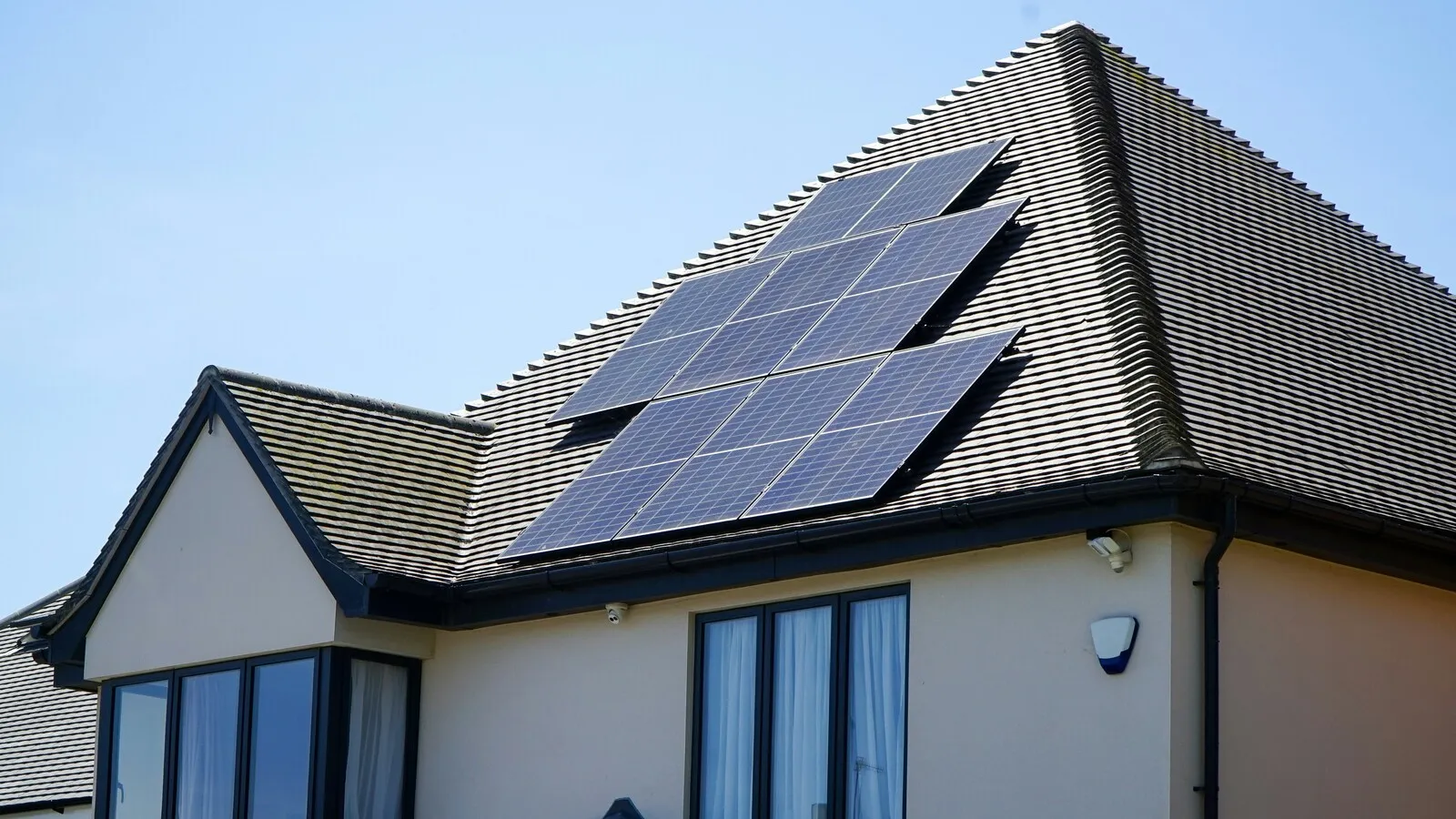
Is My Roof Suitable for Solar Panels?
Most pitched roofs in the UK can support solar panels. The main factors are orientation, pitch, shading, and condition. A south-facing roof at 30-40 degrees with no significant shading is ideal, but south-east and south-west orientations still perform well - typically generating around 90-95% of what a true south-facing roof would. East and west-facing roofs can work but produce noticeably less. A good installer will assess your specific roof before recommending a system size.
Orientation and Pitch
Roof orientation has the biggest impact on annual output. South-facing roofs capture the most sunlight across the year. South-east and south-west roofs are still strong performers and account for a large proportion of successful UK installations.
East and west-facing roofs generate less - roughly 70-80% of a south-facing equivalent - but can still be financially viable, particularly if you use a lot of electricity during morning or evening hours when those roofs are generating.
Pitch matters but is less critical than orientation. A 30-40 degree angle captures sunlight most efficiently at UK latitudes. Shallower roofs - common on modern new-builds - and steeper Victorian terraces both work, with a modest reduction in annual output.
Shading
Shading is the most common reason an otherwise promising roof underperforms. Trees, chimneys, neighbouring buildings, and rooftop obstructions such as skylights or TV aerials can all reduce output, particularly if they shade panels during peak generation hours around midday.
A reputable installer will carry out a shading assessment - sometimes using specialist software - before finalising a system design. If your roof has partial shading, an installer may recommend optimisers or microinverters, which allow individual panels to perform independently rather than dragging the whole system down when one panel is shaded.
Roof Condition
Solar panels are designed to last 25 years or more. If your roof needs significant repair or re-tiling within the next decade, it is worth doing that work before panels go on - removing and refitting panels later adds cost. A good MCS-certified installer will flag obvious roof condition concerns during the site visit.
For a full picture of what solar panels cost in 2026, including how roof complexity affects pricing, see our costs guide.
Frequently Asked Questions
Does my roof need to face south for solar panels to work?
No. South-facing roofs produce the most electricity, but south-east and south-west roofs typically generate 90-95% as much and are well worth installing on. East and west-facing roofs generate around 70-80% of a south-facing equivalent. North-facing roofs are generally not viable. Your installer should model expected output for your specific orientation before you commit.
What roof pitch is best for solar panels?
A pitch of 30-40 degrees is optimal for UK latitudes, as it captures the most sunlight over the course of a year. Shallower roofs, such as those on many modern homes, still work well. Steeper roofs perform slightly less efficiently but are rarely a reason not to install. Flat roofs can also support solar using ballasted mounting frames that tilt panels to the right angle.
Can solar panels go on a tiled or slate roof?
Yes. Most residential solar installations in the UK are on concrete or clay tiled roofs, which are straightforward to work on. Natural slate is more fragile and requires care, but experienced installers handle it routinely. If tiles are old or brittle, an installer may recommend replacing some before fitting panels. Always check that your installer has experience with your specific roof type.
Does shading ruin solar panel performance?
Heavy shading on panels during peak hours significantly reduces output. However, partial shading - a chimney stack casting a shadow for an hour or two - has less impact than people expect, particularly if optimisers are fitted. A thorough shading assessment is part of any good site survey. If shading is a concern, ask your installer specifically how they plan to address it in the system design.
Do I need to strengthen my roof before installing solar panels?
Most standard UK roofs do not need structural strengthening. A typical solar panel system adds around 15-20 kg per square metre, which is within the load-bearing capacity of the vast majority of pitched roofs. Your installer should confirm this during the site survey. Flat roofs may need a structural assessment if ballasted mounting systems are used, as the additional weight is concentrated differently.